Skip to content
SpeedRiver Door SpecialistsOpen 24/7 (226) 780-2691
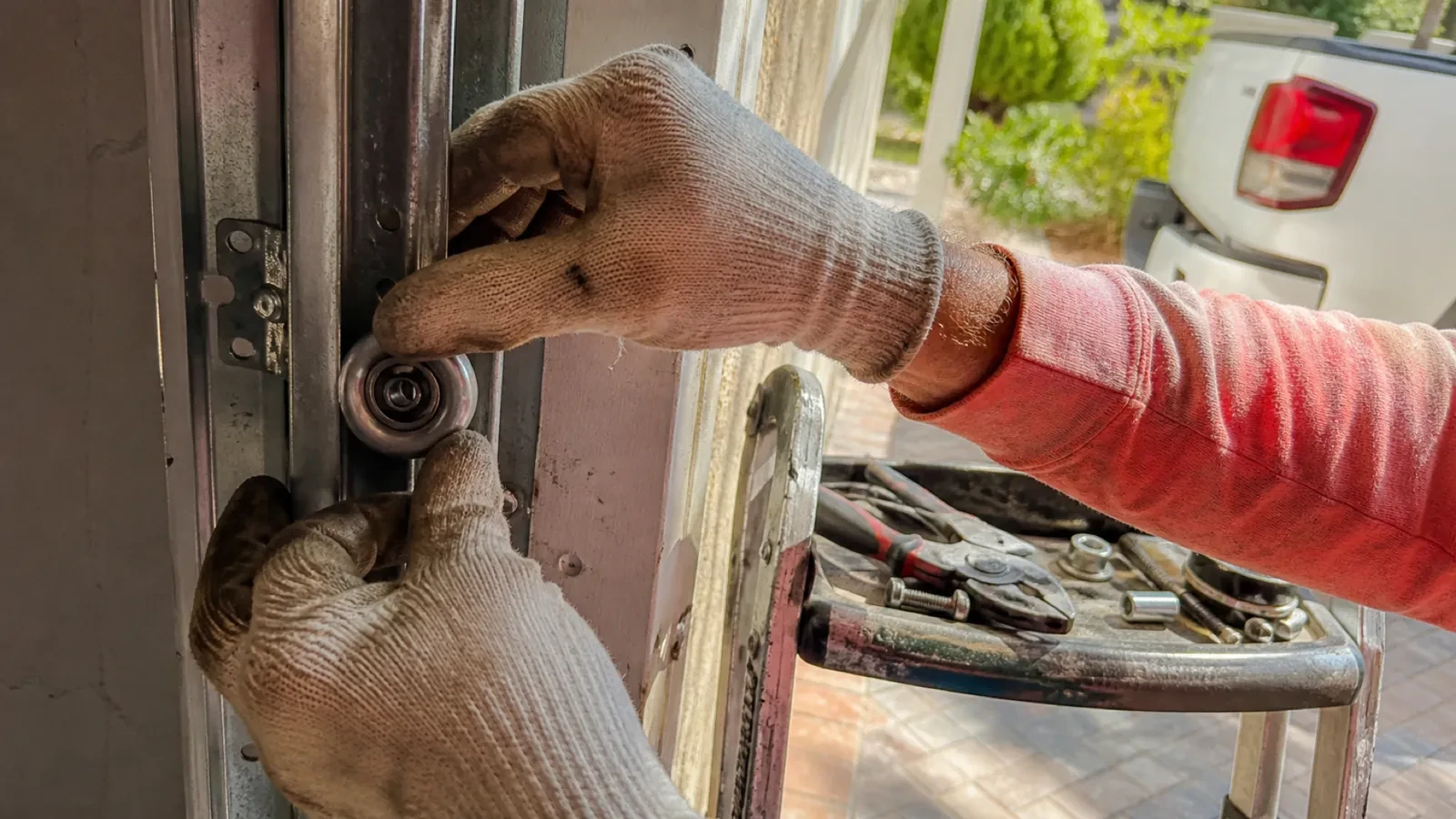
Gloved hands holding a metal roller wheel against a door track, with pliers and small hardware on a stepladder tray nearby. — Everton

Openers · Everton

Emergency Release Repair

Your garage is detached and has no side door. The remote is dead, the keypad is dead, and the small round lock in the top panel is meant to be your way in.

In plain words

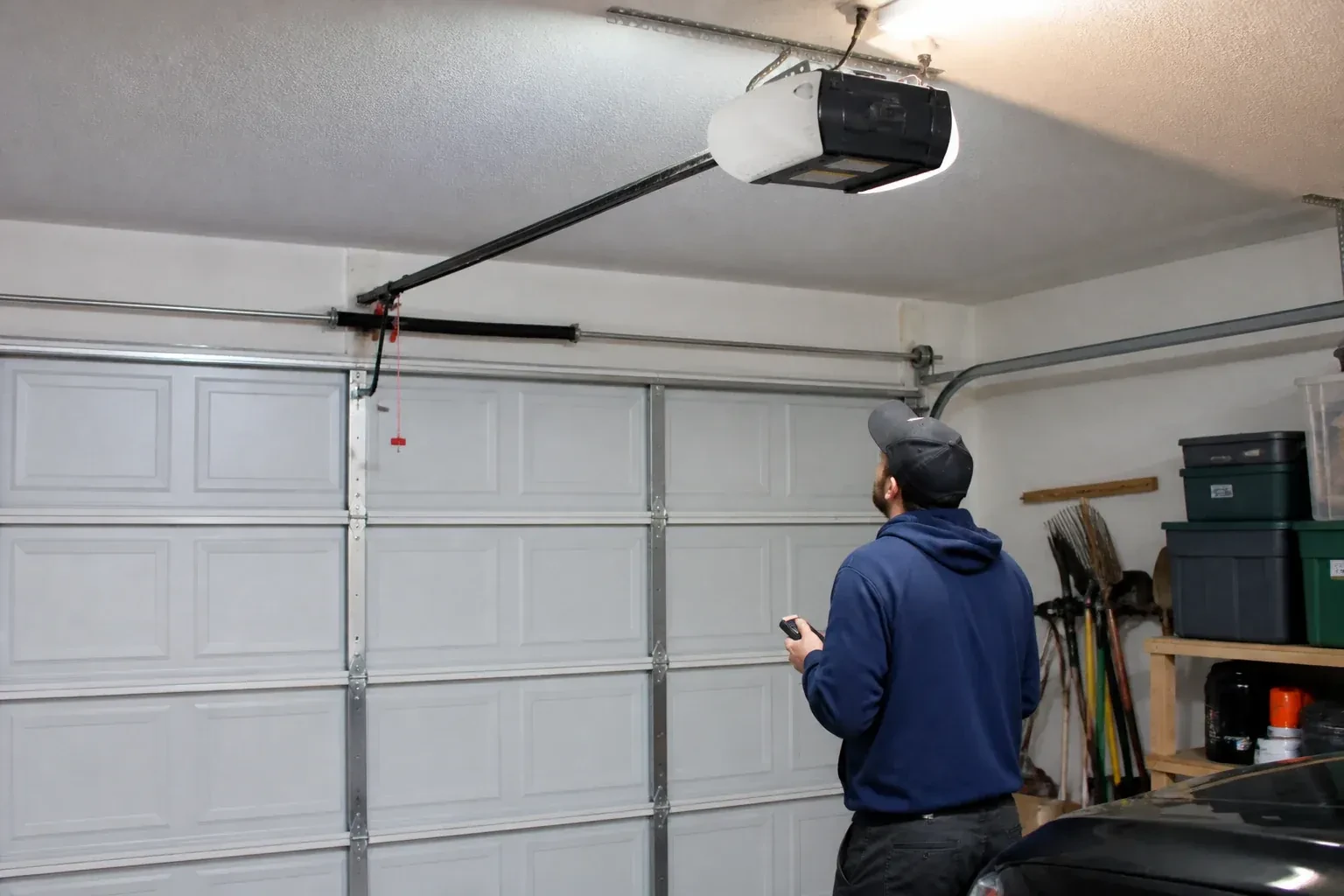
Emergency release repair puts the manual disconnect on an opener into working order. That disconnect is the red handle on a cord below the rail, the spring-loaded lever it pulls, and the trolley that lets go of the door when the lever is thrown and grips it again when the two are brought back together. When any of those parts is missing, bent, worn or set at the wrong height, moving the door by hand in an outage becomes a struggle and reconnecting it afterwards a puzzle. The technician fits parts made for that opener, sets the handle where it belongs, and proves the sequence from disconnect to reconnect.

Sound familiar?Everton

The call
The power went out in the middle of an ice storm, the car is inside, and when you reach up for the red handle there is nothing there. A frayed stub of cord hangs from the trolley, well above your fingertips, and the door sits shut.
NextHow the visit goes

Emergency Release Repair · Everton

How the visit goes

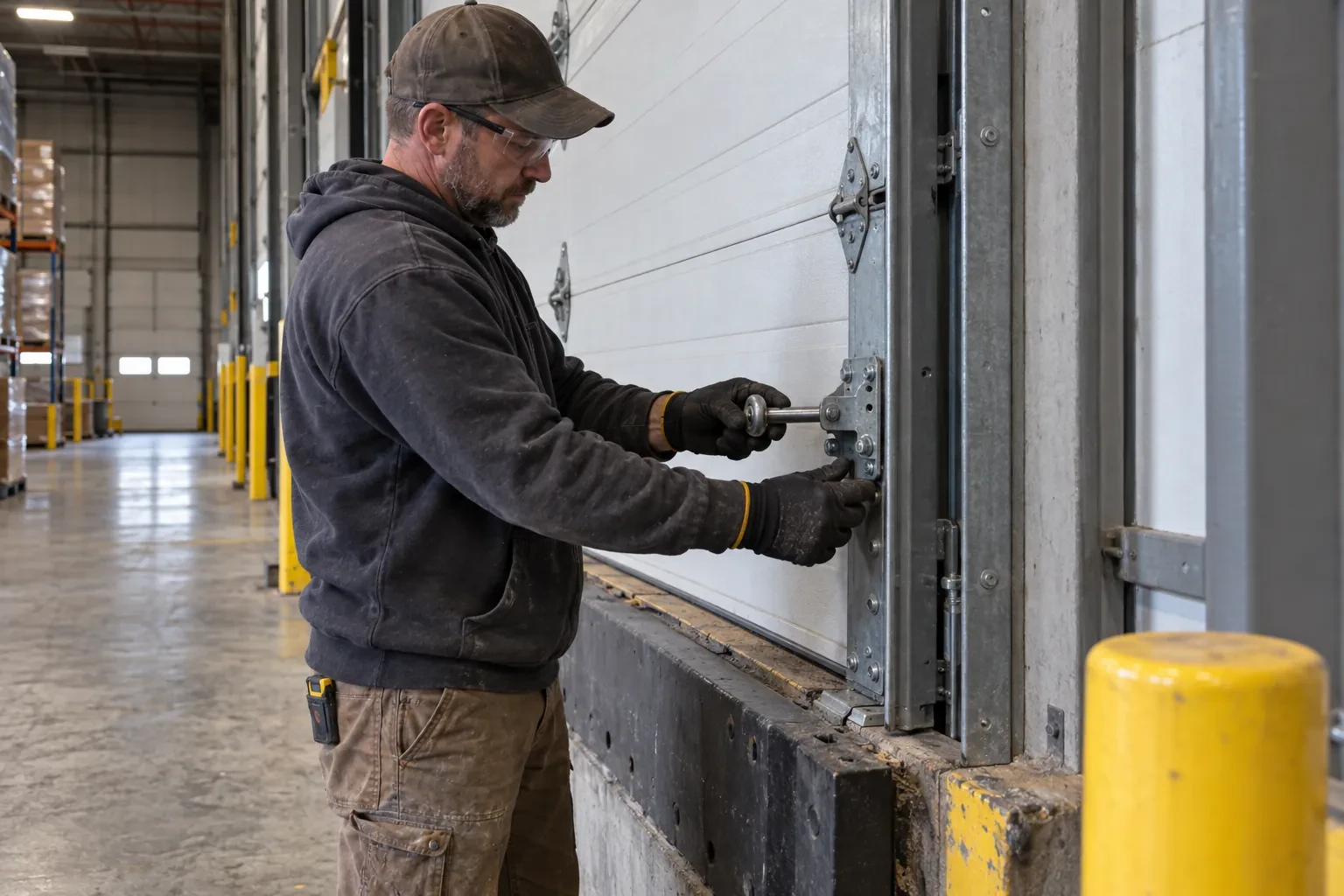
Person in clear glasses and gloves working a metal latch at the edge of a white sectional door in a warehouse bay. — Everton
  1. Scene 1

    Why the trolley will not latch

    When the complaint is a trolley that runs but never reconnects, the technician looks for the usual reasons. The cord may have been pulled back toward the opener, which on many rails deliberately holds the lever out for repeated manual use, and simply never returned. The trolley may have been driven into the stop bolt or stop tab at the end of the rail after the travel limits drifted, so it sits jammed with the motor humming. The latch teeth may be worn, or the release arm bent so it can no longer drop into place. Each of these has a different fix, and telling them apart takes a minute with the cover off.

  2. Scene 2

    Freeing a trolley from the stop bolt

    A trolley jammed against the stop at the end of the rail is freed rather than forced. The release is pulled so the door is out of the picture, the chain or belt tension nut is backed off a few turns to give the trolley room, and the motor is run so the trolley walks away from the stop. The travel limit that let it run too far is then adjusted, the chain or belt is re-tensioned to the sag the maker specifies for that rail, and the trolley is reconnected. Because the limits were touched, the door is cycled and the reversal tests are repeated before the job is called done.

  3. Scene 3

    Through the winter

    A release serviced in autumn is set up for the season the household is most likely to need it. The cord is rope that stays supple in the cold, the outside cylinder has been cleaned and lubricated, and the door has been proven to lift by hand with the bottom seal freed rather than frozen. Keep snow and ice cleared from the threshold so a manual lift is not working against a seal stuck to the slab, and keep the slide bolt or manual lock handy for nights when the door is in manual mode. A door that moves by hand is a door that gets you out.

In the van

  • Release cable and clips
  • Chain or belt tension hardware
  • Outside key release kit (lock, cable, keys)
  • Hole saw for the top section
  • Release lever and spring

What shapes the quoteSpeed River Door Specialists

Outside key release: repair or new
Renewing a cylinder, cable or keys on an existing outside release is one line; cutting the door and fitting a complete kit where none exists is another, and both are named separately.
Door material for the outside release
Cutting a cylinder hole through a thin steel section is routine; an insulated door, a wood door or a glass-panel top section takes more care and sometimes a reinforcing plate.
Time of the call
A weekday daytime visit and an evening, weekend or holiday one cost the same amount for freeing or repairing an emergency release. The exact figure is confirmed once the technician has seen the trolley, the cord or lever, and how the door was left.

FeesSame any hour

Have it ready

Before you call · 0 / 3

(226) 780-2691

Short answers

My car is trapped inside and I have an appointment. Can I just push the door open?

Better not. A door forced against a jammed trolley or a locked door can bend the arm, the top section or the track, and a vehicle driven at a door releases the stored tension in the springs. The release is the tool for this moment: with the door closed, pull the handle and lift the door by its handle. If the handle is missing or the trolley will not let go, a technician can reach the lever and have the door moving by hand.

How high should the release handle hang?

No more than about 1.8 metres above the floor, so an adult standing on the slab can reach it, and high enough to clear the roof of the car parked beneath it. It should also be plainly visible and red. If a new door or a rail change left the cord short, or a previous owner tied it up around the rail, the technician cuts a fresh rope to the right length and moves any obstruction out of the way.

My door lets go of the opener partway through travel. Why?

A release lever that is only half-latched will hold until the door's weight shifts, then drop out. That points to a weak or missing lever spring, a bent lever, or worn latch teeth on the trolley. It can also follow a hard pull on the cord that left the lever cocked. The fix is a new spring or lever, or a new trolley, and a check that the door is balanced so the trolley is not carrying more than it should.

Evertoninformation

WellingtonOntario

Emergency Release Repair · Guelph, Guelph/Eramosa, Puslinch, Priory Park

Town
Everton, Wellington
In business
30 years
Hours
Open 24/7
Nights, weekends and holidays, same fees
Visits
On-site assessment preferred. Request a visit or call.

2021 census: what it means at the door

Every square is one home in a hundred.

  • 44 in 100 homes · mixed ages
  • About 44% of homes in Guelph/Eramosa were built in 1980 or earlier, according to the 2021 Census.A mixed-age neighbourhood is where retrofits are most common: safety cables added to extension springs, a torsion conversion on an older door, insulated panels replacing a hollow door, or a quieter belt opener under a newly finished room above the garage. Each is a routine job for us.
  • Single-detached houses make up about 87% of homes in Guelph/Eramosa (2021 Census).Households in detached homes often have several remotes, a keypad and a phone app between family members and their cars. We keep all of them programmed to the opener, replace the ones that have failed, and explain how to add a new one when a car changes hands.

Source: Statistics Canada, Census Profile

Open Everton in Google Maps

On-site assessment

Request a visit.

Your garage is detached and has no side door.

(226) 780-2691, open 24/7.