Sound familiar?Everton
- The call
- A high-lift door begins smoothly, then a cable loses tension as the top sections change direction. The loose cable no longer follows its drum grooves evenly, leaving the door unreliable at the top of travel.
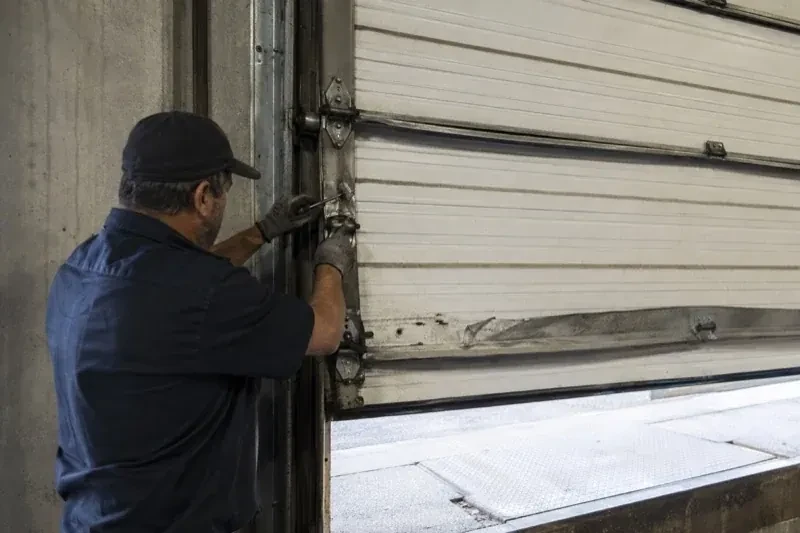
The loading-bay door rises with one side several centimetres lower than the other. A lift cable looks slack, the bottom section sits crooked, and staff have stopped using the opening until the door can travel level again.
Unusual sound is useful diagnostic information on a commercial sectional door. A knock at the track curve suggests different issues from a steady bearing growl, a scraping section or operator-chain chatter. The technician listens during a controlled cycle, then inspects the hardware at the point where the sound appears. Worn rollers, loose hinges, dry bearings, displaced track and drive components can each be dealt with directly. The completed repair finishes with lubrication where specified and repeated observation of the previously noisy part of travel.
Sound familiar?Everton
Commercial Sectional Door Repair · Everton
Scene 1
Model and serial information, opening size, section construction and prior service notes narrow the inspection before anything is removed. The technician also asks about daily traffic, recent collisions, changes in sound and the position where symptoms occur. Comparing this history with spring markings, cable dimensions, roller stems and operator data helps identify compatible components. On multi-door properties, neighbouring openings may provide useful context when they share an installation date or configuration. Good records turn a broad complaint into a precise repair plan and leave a stronger baseline for later maintenance.
Scene 2
Bent or shifted track is corrected from the opening upward. Vertical guides are set plumb and at the proper spacing, curved sections are aligned for a smooth transition, and horizontal runs are supported to prevent sag or sideways movement. Loose jamb brackets, splice points, back hangs and sway braces are tightened or replaced according to the surrounding structure. Rollers and hinges are renewed where wear has added play. The technician moves the door gradually while observing clearance at every section, making small geometry adjustments before completing a powered cycle.
Scene 3
Repair restores the equipment, while everyday habits help preserve it. Marked stand-off areas give vehicles room to clear the bottom section and vertical tracks. Loads are staged beyond the door path, control stations remain visible, and staff wait for the opening to reach its operating position before passing through. The threshold is kept free of packaging, ice and debris. When everyone knows which sound, movement or sensor indication to report, small changes are documented clearly and the door can be assessed with useful evidence rather than a vague description.
What shapes the quoteSpeed River Door Specialists
FeesSame any hour
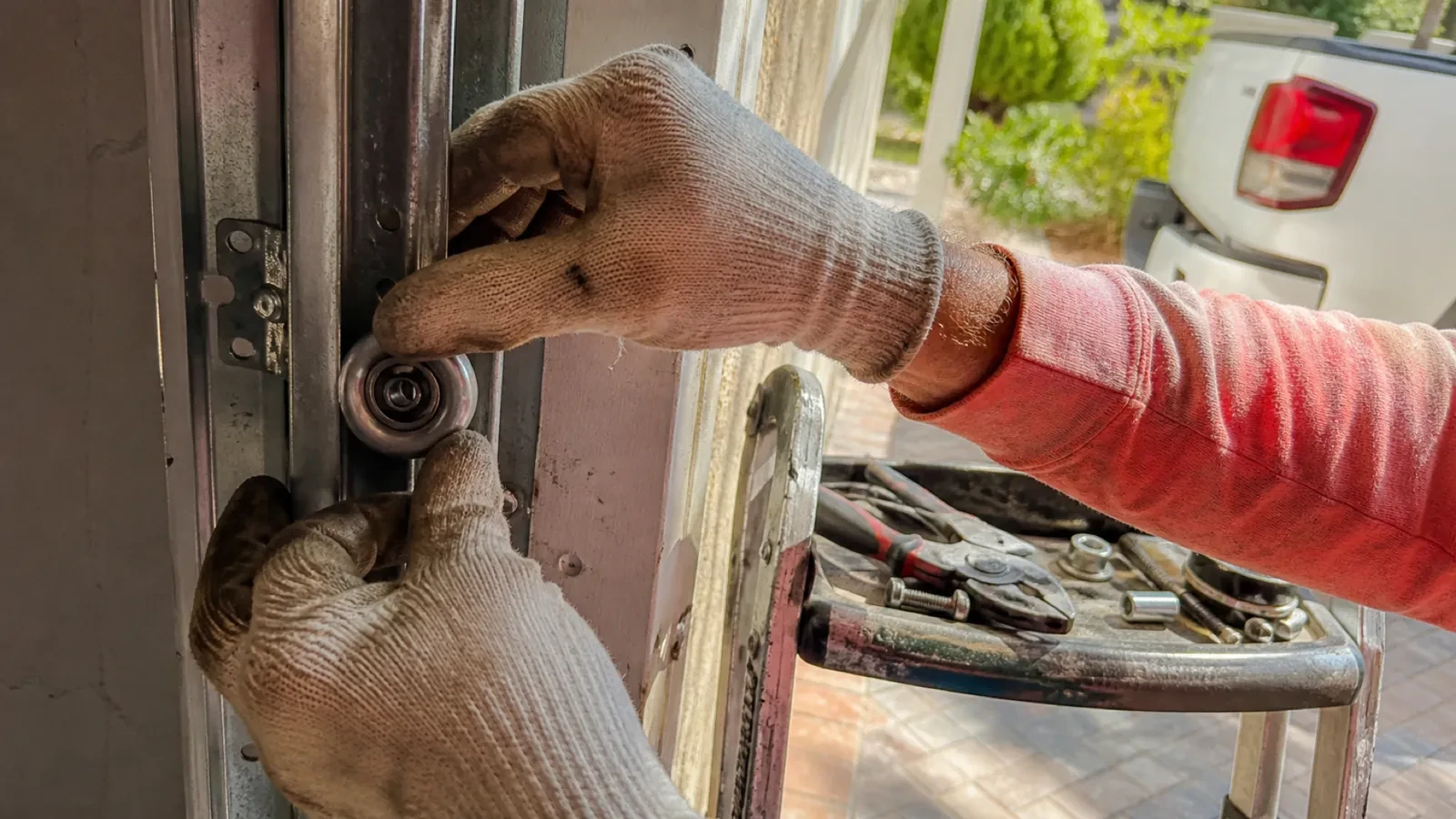
The technician first controls the door's weight and position with suitable supports or clamps. Stored spring energy is then managed with proper winding tools and a defined sequence before connected parts are loosened. Cables, drums and springs are matched to the door and lift geometry, installed with the system secured, and checked for level tension through controlled movement.
Clear vehicles, pallets and stored materials from both sides of the opening and arrange another traffic route. Have the door number, model information, control location and service record available if possible. Note where in the cycle the symptom occurs and whether there was an impact or recent change. Access to the electrical isolation point may also be needed.
A reversal can start with a blocked or misaligned photoelectric sensor, a distorted sensing edge, resistance in the track, an incorrect close limit or a control-circuit issue. Inspection covers the clear opening, sensor alignment and wiring, bottom edge and mechanical travel. The source is corrected first, then the protective response is tested through several complete cycles.
WellingtonOntario
Commercial Sectional Door Repair · Guelph, Guelph/Eramosa, Puslinch, Priory Park
Every square is one home in a hundred.
On-site assessment
The loading-bay door rises with one side several centimetres lower than the other.
(226) 780-2691, open 24/7.
On-site assessment preferred · (226) 780-2691, open 24/7