Sound familiar?Guelph
- The call
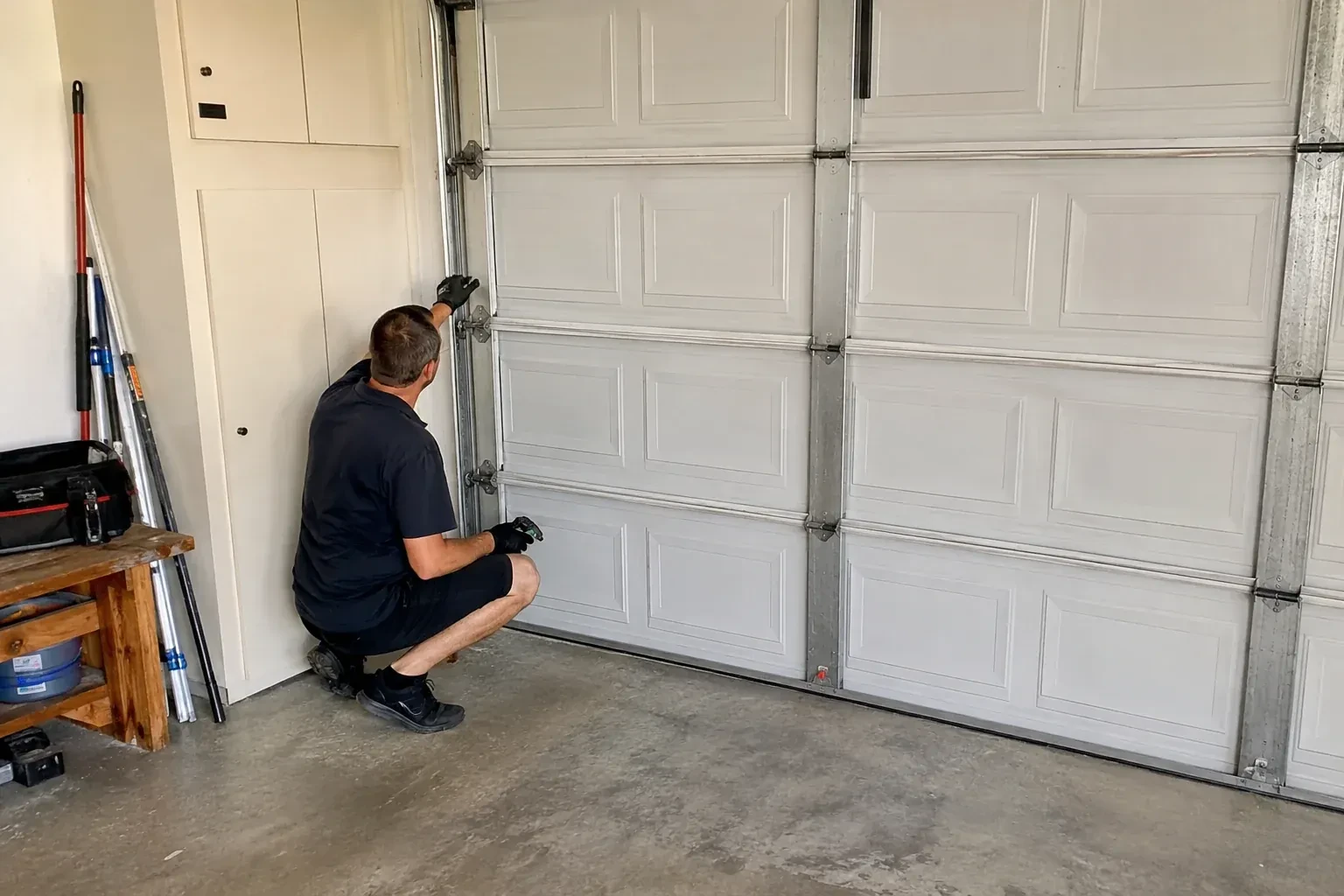
- The rollers on the door have been squealing for months. Today one of them simply fell out of the track at the curve, its wheel worn down to the stem, and the top section sagged sideways as the door opened.
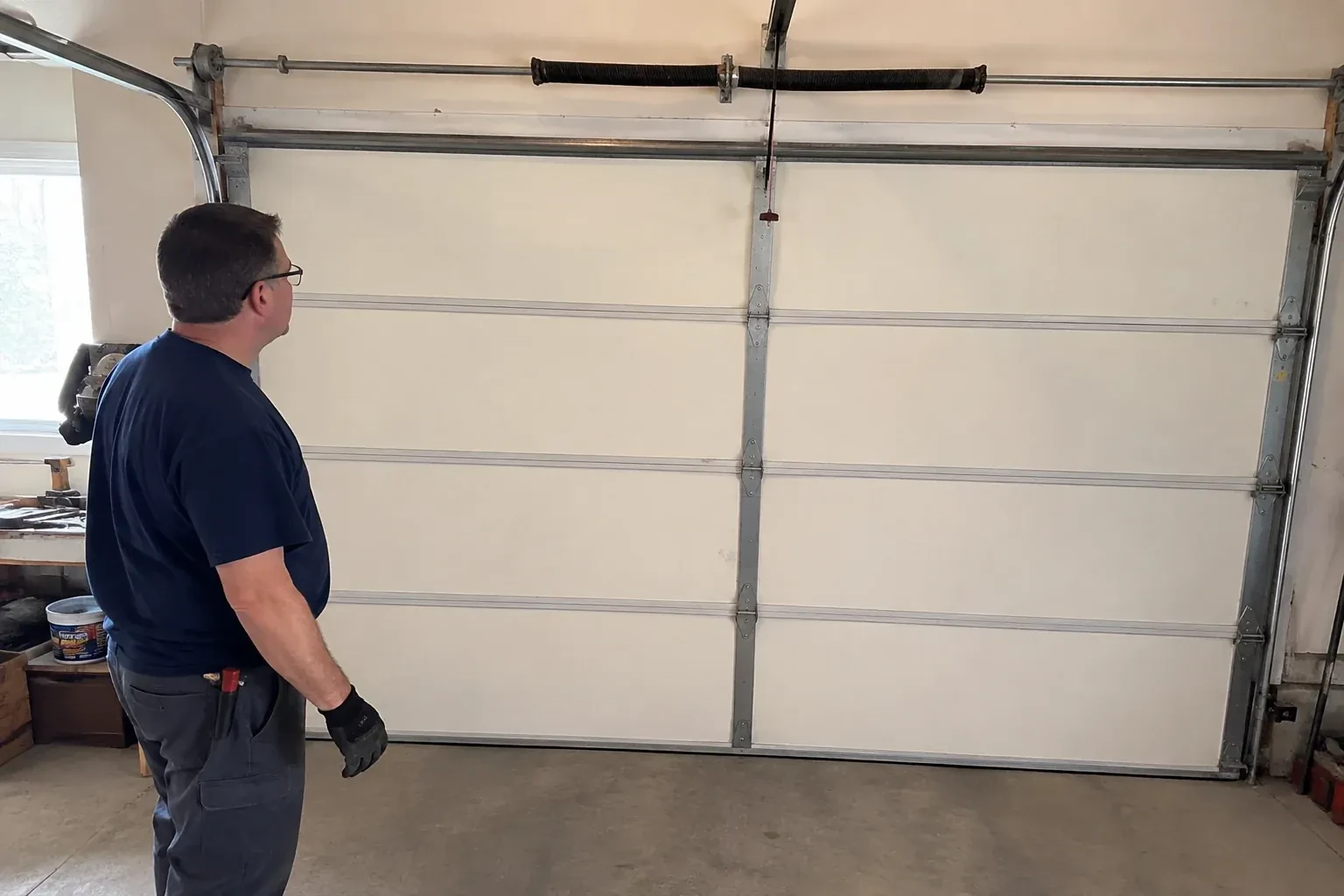
When one side of a door drops and the sections tilt, the lifting cables are usually involved. Each cable runs from a bottom bracket up to a drum on the torsion shaft, and both must stay taut and wound evenly for the door to rise level. A cable that frays, snaps or unwinds off its drum lets that side fall, and the rollers on the other side pop out as the door twists. The reset re-seats or replaces the cables as a matched pair, rewinds the springs to the door's weight and only then puts the rollers back, so the door rises straight rather than repeating the drop.
Sound familiar?Guelph
Off-Track Garage Door Reset · Guelph
Scene 1
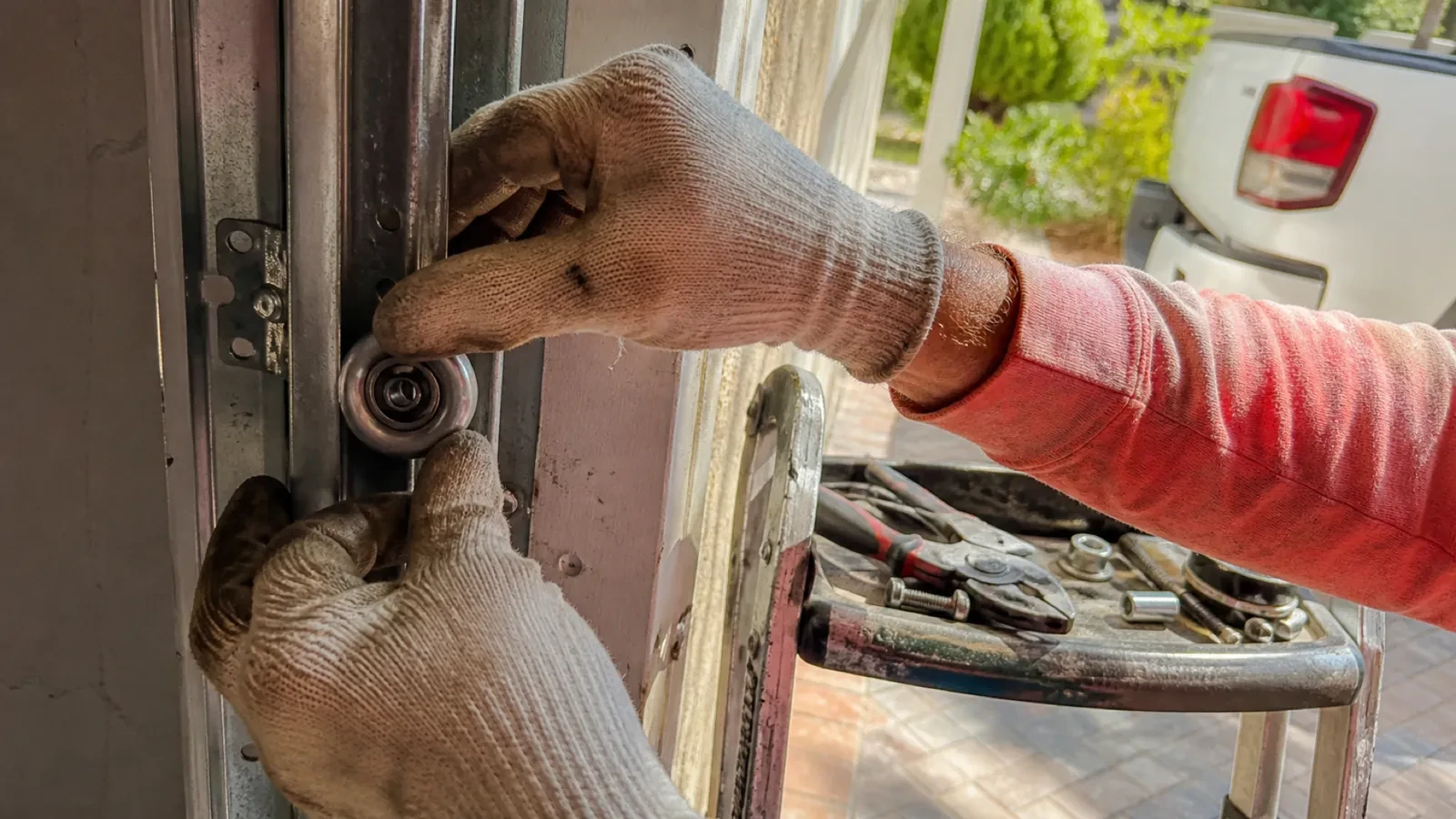
The first job is to stop the door doing anything unexpected. The technician clears people, pets and anything stored near the opening, unplugs the opener or pulls the release cord so the motor cannot be triggered from a remote, and looks at how the door is holding its position. Locking pliers go onto the track below the lowest roller and a support goes under a section that could drop. Only once the door is clamped and steady does the closer look begin. This takes a few minutes and it is what lets the rest of the visit proceed calmly rather than around a door that could shift.
Scene 2
A cable that unwound or crossed on its drum is stripped back and rewound in its groove, beginning at the cable stop and laying each turn beside the last. Both cables are set to equal length so the bottom section hangs level, then the drums are locked to the shaft and the springs are rewound to the door's weight. A cable with kinks, rust or broken strands is replaced along with its partner so the two sides age together. This part of the work is done with the door clamped fully closed and the sections held, because a cable coming under tension is exactly when a door wants to move.
Scene 3
The visit closes with a plain explanation of what let the roller go: an impact, a cable that slipped, ice on the threshold, a worn wheel or a bracket that had pulled from the wood. You are told what was reset, what was replaced and what was adjusted, and whether anything was left for a later decision, such as tired springs or a section with a crease that still works but will not improve. Knowing the cause is what lets you prevent a repeat, and it gives you a clear record if the door is ever assessed again or if an insurer asks what a vehicle strike involved.
What shapes the quoteSpeed River Door Specialists
FeesSame any hour
It is better to leave the opener alone. A racked door does not become straighter with another cycle; every press of the button forces the crooked sections deeper into the rails and strains the hinges and wall brackets. Unplug the opener or pull the red release cord if the door is fully closed, keep people and vehicles clear, and let the technician move it in a controlled way.
Often not. A track that is simply out of plumb, spread at the lip or loose on its brackets is re-formed and re-fixed. Replacement is for rail that has been crushed, kinked or torn by an impact, because a roller passing a tight spot will pop out again. The technician measures the damaged length against the door's roller size and tells you which case you have before any track is ordered or cut.
Balance shows that the springs are carrying the door's weight so the opener only guides it. After a reset the door is disconnected from the opener, raised by hand to the halfway point and released; a balanced door holds there with little drift. If it falls or shoots up, the counterbalance needs adjusting before the opener is reconnected, otherwise the motor strains and the rollers are pushed out of line again.
WellingtonOntario
Off-Track Garage Door Reset · Guelph/Eramosa, Puslinch, Priory Park, Everton
Every square is one home in a hundred.
On-site assessment
There was a loud bang from the garage, then silence.
(226) 780-2691, open 24/7.
On-site assessment preferred · (226) 780-2691, open 24/7