Skip to content
SpeedRiver Door SpecialistsOpen 24/7 (226) 780-2691
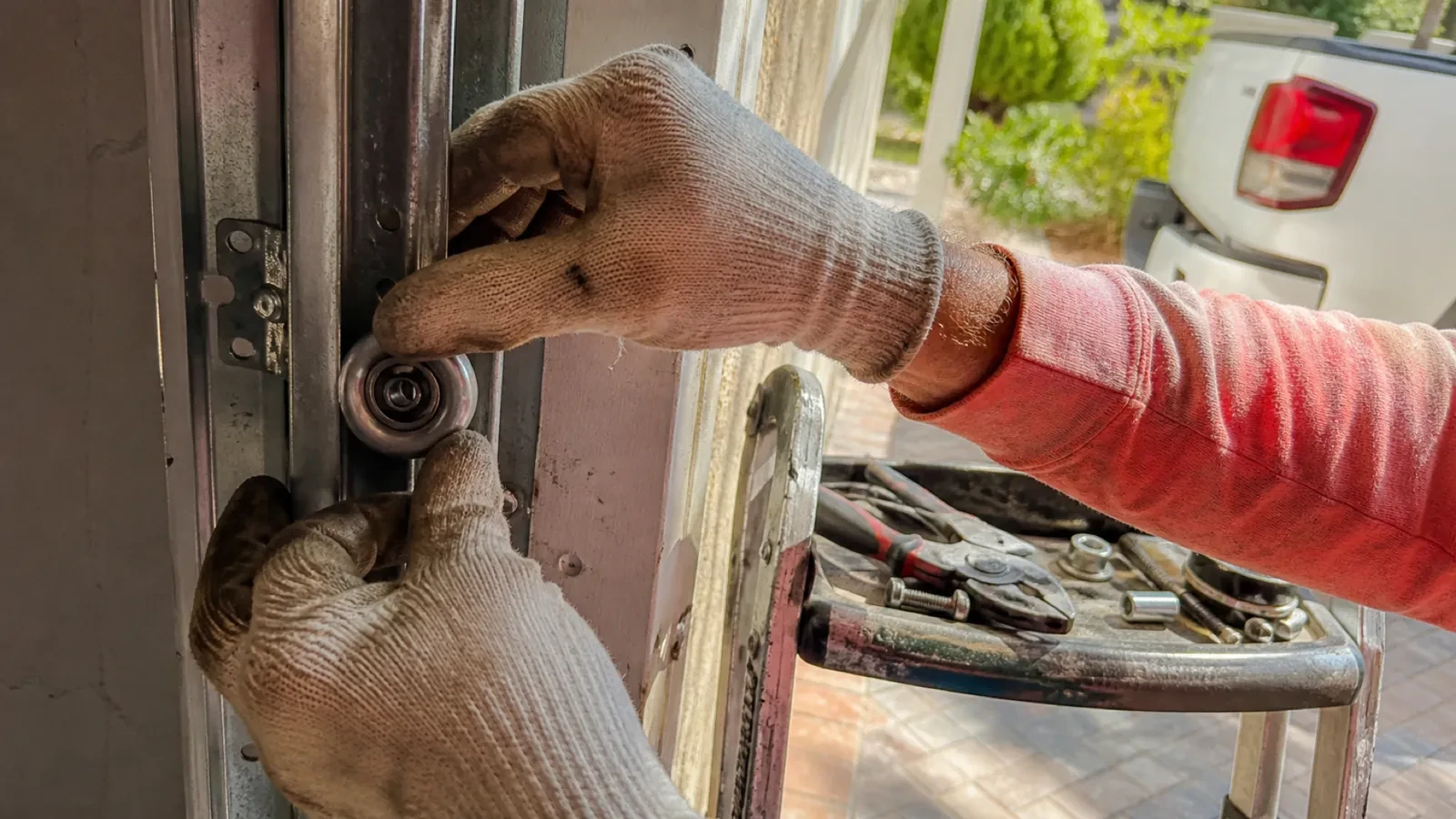
Gloved hands holding a metal roller wheel against a door track, with pliers and small hardware on a stepladder tray nearby.

Openers · Guelph

Emergency Release Repair

Your garage is detached and has no side door. The remote is dead, the keypad is dead, and the small round lock in the top panel is meant to be your way in.

In plain words

The release only earns its keep on a door that behaves once it is free of the opener, so the visit starts with the door closed and a balance test rather than with the handle. Disconnected, a healthy door lifts with modest effort, holds around a metre off the floor and stays put at the top. That is the door the release is designed for. If the door is heavy, drifts down or shoots up, the springs need attention first, work done with winding bars by a technician trained for tensioned hardware. Once the door passes, the release work goes ahead and the system is proven together.

Sound familiar?Guelph

The call
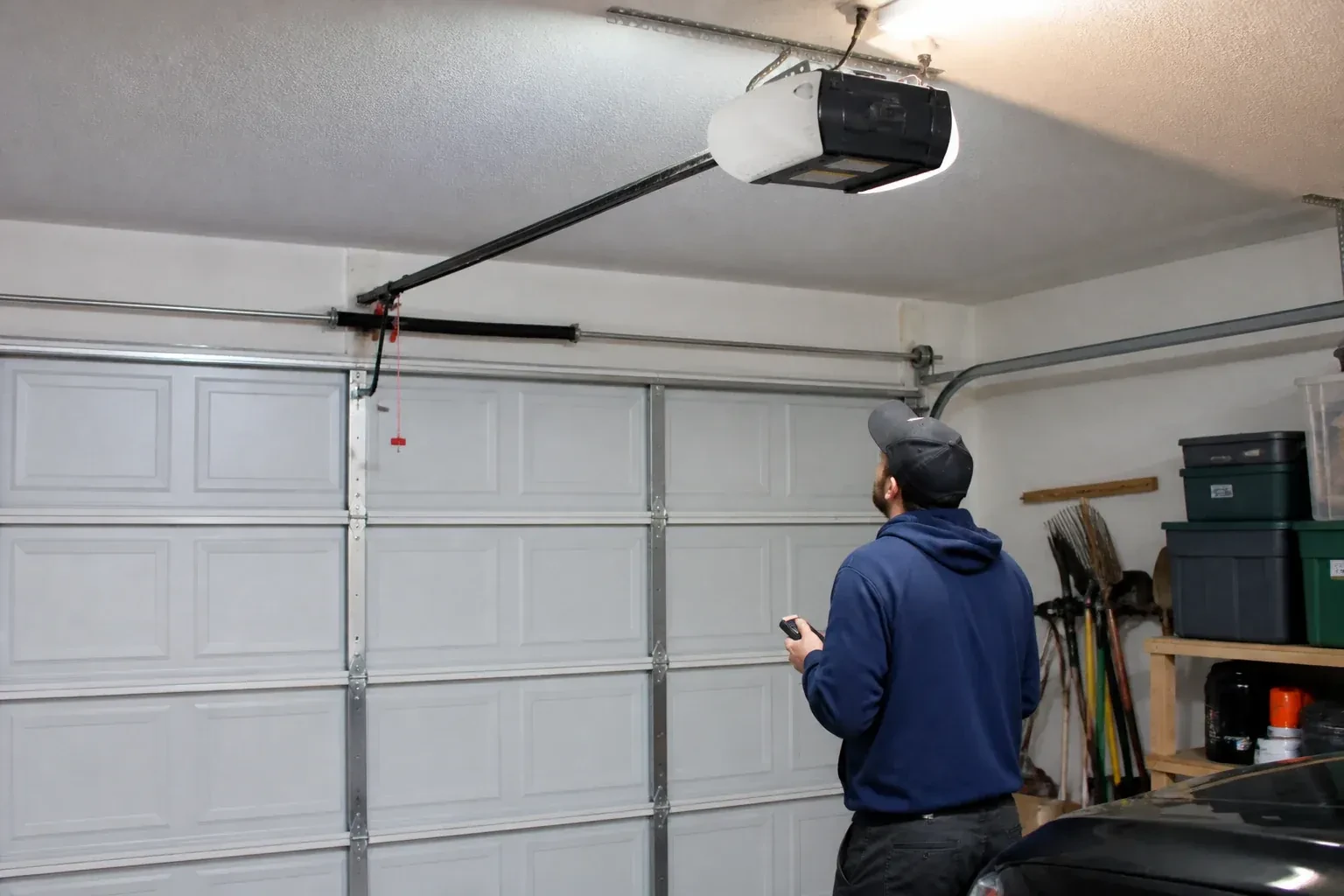
Since the new door went in, the red handle has hung just below the ceiling, a stepladder's height above anyone in the household. During last week's blackout your daughter stood under it with a broom, unable to hook it down.
NextHow the visit goes

Emergency Release Repair · Guelph

How the visit goes

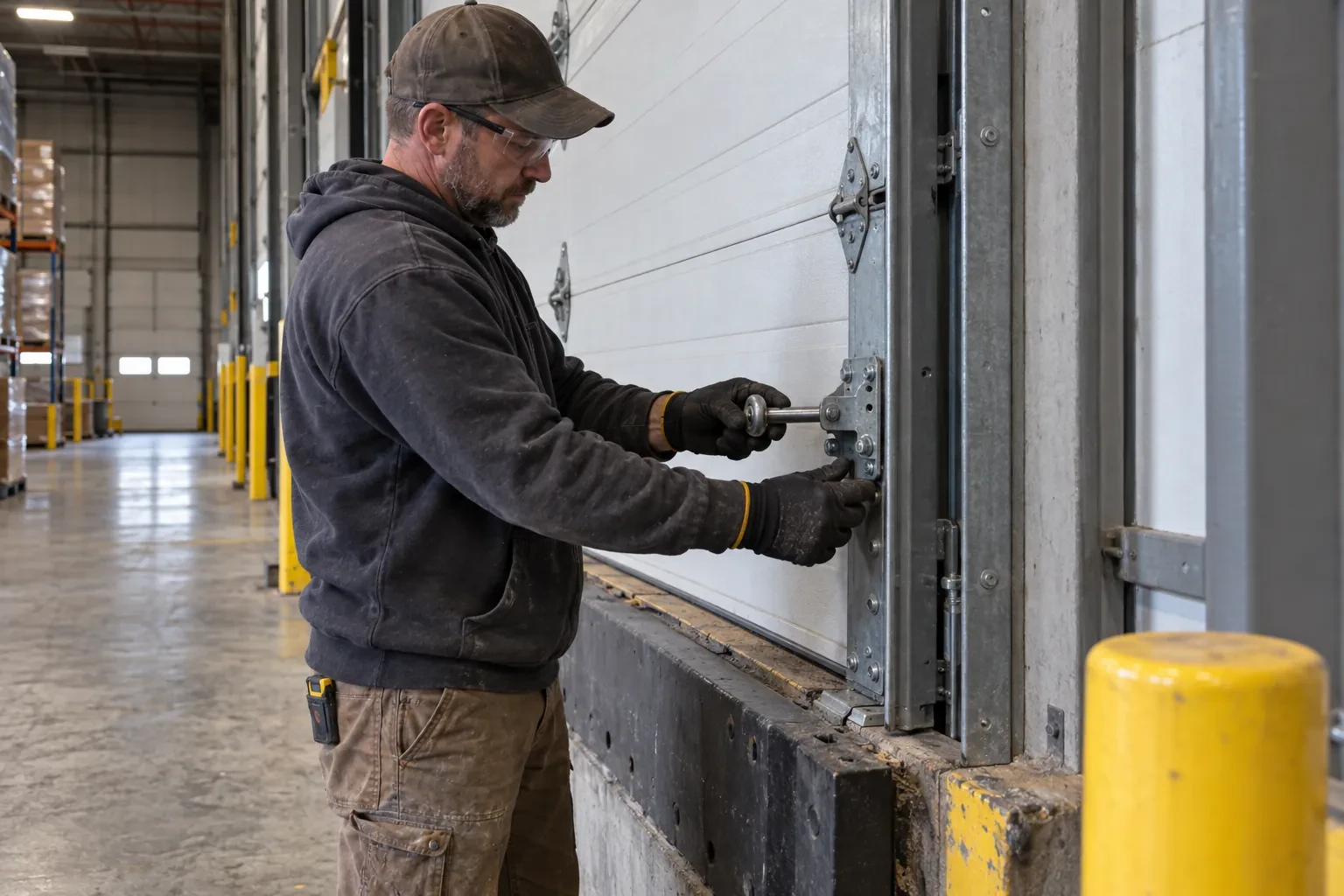
Person in clear glasses and gloves working a metal latch at the edge of a white sectional door in a warehouse bay.
  1. Scene 1

    Where the handle hangs

    Height and position are measured, not guessed. The handle should hang no more than about 1.8 metres above the floor so a person standing on the slab can reach it, and it should clear the roof and antenna of the vehicle parked beneath. The technician also looks at what surrounds it: shelving, bikes on hooks, a storage loft, a cord tied up around the rail by a previous owner. A handle nobody can find in the dark is as good as no handle at all, so obstructions and a cord that was shortened after a door change are recorded as part of the fault, not as clutter.

  2. Scene 2

    Replacing the trolley or carriage

    Latch teeth that have worn round, a cracked trolley body or a carriage bent when a door dropped onto it call for a new assembly. The technician slackens the drive, disconnects the arm from the door, slides the old trolley off the rail and fits the replacement that matches the opener's model and rail type, then reattaches the arm with new clevis pins and clips. The chain or belt is set to the correct tension, the trolley is run to the door and latched, and the opener is cycled until the technician is satisfied the connection is solid at both ends of travel. Old parts are shown to you before they leave.

  3. Scene 3

    Keys for the outside release

    Where an outside key release was fitted or repaired, you leave with two keys and the cylinder proven from the driveway. One key belongs on your ring; the other belongs somewhere outside the garage, with a neighbour or in a lockbox, since a spare inside the garage is behind the very door it opens. In winter, keep the cylinder face clear of slush and give it a puff of dry lock lubricant before the cold sets in. The release only disconnects the door; lifting still happens by hand, using the door's handle, so the balance check the technician did today is what makes that lift easy.

In the van

  • Release cable and clips
  • Chain or belt tension hardware
  • Outside key release kit (lock, cable, keys)
  • Hole saw for the top section
  • Release lever and spring

What shapes the quoteSpeed River Door Specialists

Age and parts availability
Trolleys, levers and rope kits for openers from the last two decades are stocked. An older model may need a part sourced, and the quote says whether that is a wait or a reason to consider replacement.
Demonstration and labelling
Walking the household through the release, fitting a fresh warning and instruction label near the wall control, and adding handles or gripping points to the door are small tasks that are itemized when they are part of the visit.
Damage from a door that dropped
A release pulled on an unbalanced open door can bend the arm, the carriage, a bracket or a panel. Anything that took the impact is listed on its own once it has been seen.

FeesSame any hour

Have it ready

Before you call · 0 / 3

(226) 780-2691

Short answers

My car is trapped inside and I have an appointment. Can I just push the door open?

Better not. A door forced against a jammed trolley or a locked door can bend the arm, the top section or the track, and a vehicle driven at a door releases the stored tension in the springs. The release is the tool for this moment: with the door closed, pull the handle and lift the door by its handle. If the handle is missing or the trolley will not let go, a technician can reach the lever and have the door moving by hand.

How high should the release handle hang?

No more than about 1.8 metres above the floor, so an adult standing on the slab can reach it, and high enough to clear the roof of the car parked beneath it. It should also be plainly visible and red. If a new door or a rail change left the cord short, or a previous owner tied it up around the rail, the technician cuts a fresh rope to the right length and moves any obstruction out of the way.

My door lets go of the opener partway through travel. Why?

A release lever that is only half-latched will hold until the door's weight shifts, then drop out. That points to a weak or missing lever spring, a bent lever, or worn latch teeth on the trolley. It can also follow a hard pull on the cord that left the lever cocked. The fix is a new spring or lever, or a new trolley, and a check that the door is balanced so the trolley is not carrying more than it should.

Guelphinformation

WellingtonOntario

Emergency Release Repair · Guelph/Eramosa, Puslinch, Priory Park, Everton

Town
Guelph, Wellington
In business
30 years
Hours
Open 24/7
Nights, weekends and holidays, same fees
Visits
On-site assessment preferred. Request a visit or call.

2021 census: what it means at the door

Every square is one home in a hundred.

  • 44 in 100 homes · mixed ages
  • About 44% of homes in Guelph were built in 1980 or earlier, according to the 2021 Census.A neighbourhood with homes from several decades means a technician meets both generations of garage door in a single day: extension-spring wood doors next to steel sectionals on torsion hardware. The van carries parts for both so either kind of door is repaired on the first visit.
  • Single-detached houses make up about 49% of homes in Guelph (2021 Census).A blend of housing means a blend of garages: spacious attached garages with full headroom on the detached lots, and tight tandem garages with little side room in the attached units. Openers, tracks and springs are all sized at the door rather than assumed from the street.

Source: Statistics Canada, Census Profile

Open Guelph in Google Maps

On-site assessment

Request a visit.

Your garage is detached and has no side door.

(226) 780-2691, open 24/7.