Sound familiar?Puslinch
- The call
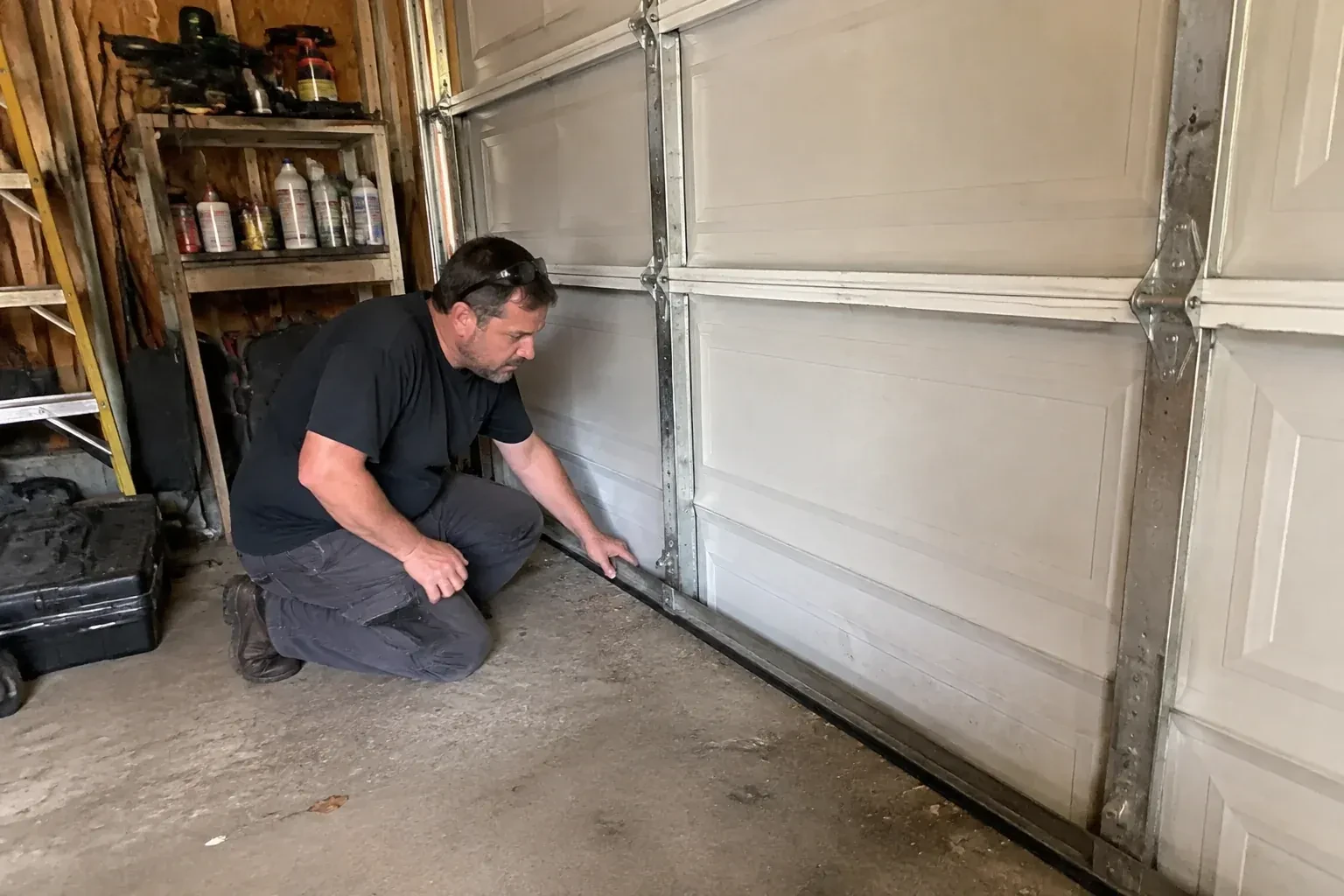
- Your older door has springs along the tracks, and one cable has slipped off its pulley and dangles slack. The door lifts crooked and needs a shoulder to close, when it used to glide.
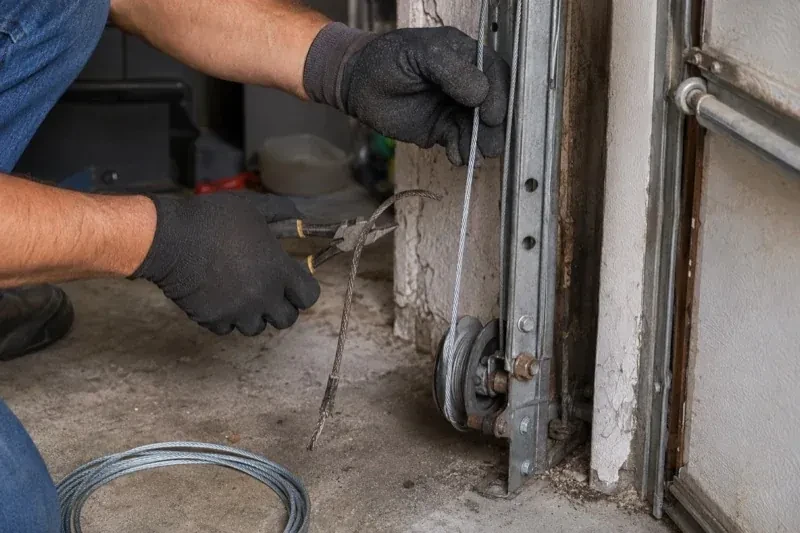
Two steel cables do the lifting on a sectional garage door. Each runs from a bracket at a bottom corner up to the counterbalance, and the springs pull on the door through them. Cable replacement renews that link. The technician secures the door, takes the tension off the springs, removes the worn or displaced cables, fits new ones matched to the door's height and weight, and re-tensions everything so both corners rise together. The result is a door that travels level again, closes flush to the floor, and asks the opener for the modest effort it was designed to give.
Sound familiar?Puslinch
Garage Door Cable Replacement · Puslinch
Scene 1
The technician identifies the counterbalance before choosing parts. A shaft with drums above the header means a torsion system; springs stretched beside the horizontal tracks with pulleys mean extension. Then the lift type: standard lift on most attached garages, low headroom hardware where the ceiling is tight, and high lift where the door climbs well above the opening before turning. Each uses a different drum profile and a different cable length, and a double door of the same height may need a heavier cable than a single. Reading these details correctly is what makes the replacement cable wind evenly on the drum instead of overlapping.
Scene 2
With the door clamped and the opener disconnected, the technician unloads the torsion springs. Two solid winding bars sized to the cone holes are used in turn: one holds the cone while the set screws are loosened, then the spring is let down a quarter turn at a time, bar over bar, until the coil is relaxed and the shaft turns freely. Every turn released is counted, because the same number goes back on later. On an extension door the technician instead raises the door fully and clamps it, which lets the springs hang slack. Once the tension is off, cables, drums and brackets can be handled like any other hardware.
Scene 3
The simplest care is a look. Once a month, with the door closed and the light on, stand inside and follow each cable from the bottom bracket up to the drum. You are looking for broken wires standing out from the strand, a brown bloom of rust near the bottom loop, a kink, or a cable that hangs slack while the other is taut. Then check the door sits level and each drum shows a neat single wrap. Anything you notice is worth a call while it is still a small job. The whole check takes less than a minute and is the same one the industry maintenance checklist recommends.
What shapes the quoteSpeed River Door Specialists
FeesSame any hour
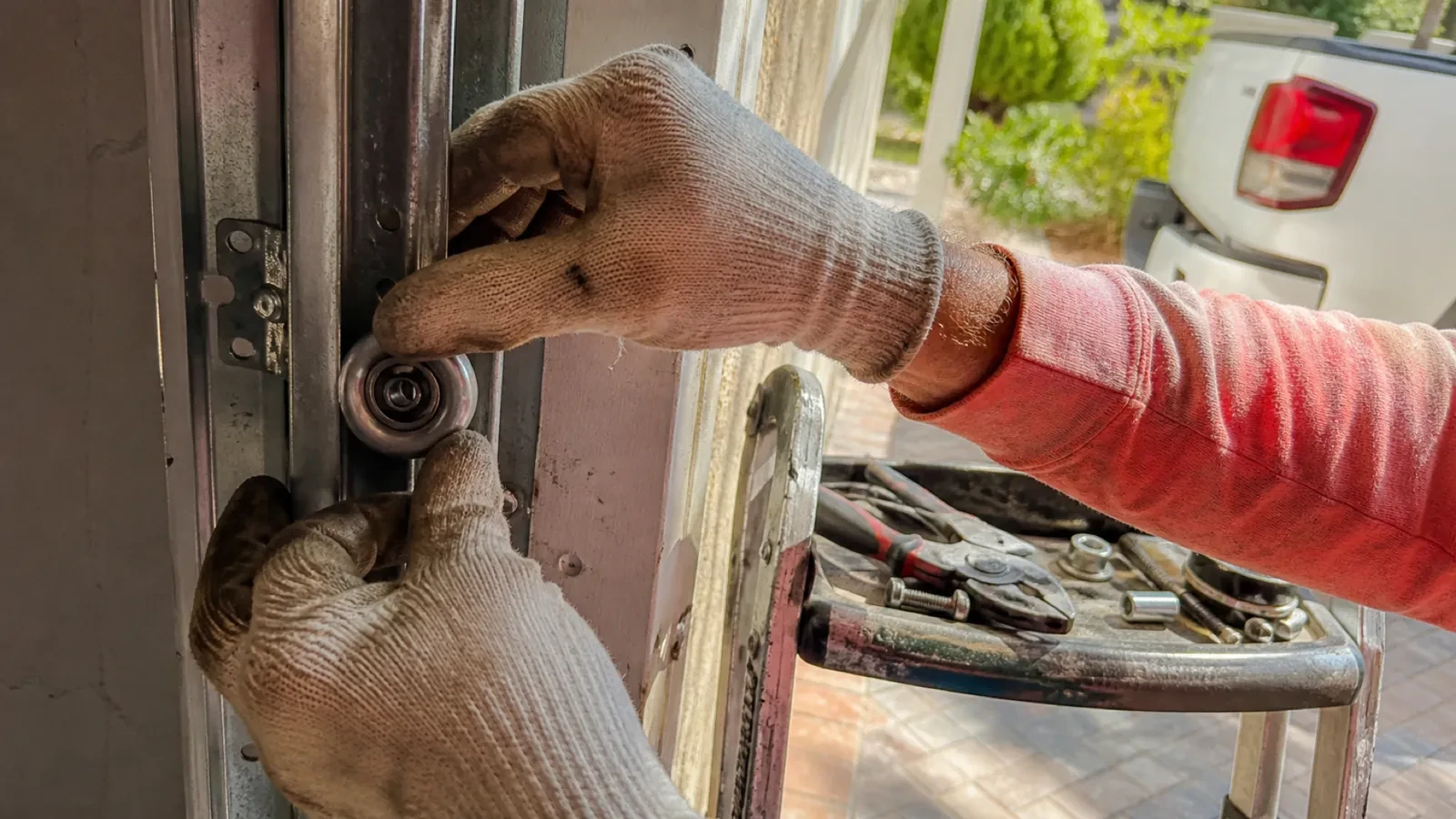
The bottom bracket is where the cable attaches, so whenever the springs are wound it carries a share of the door's weight as tension. Loosening it while the counterbalance is loaded releases that tension all at once. Many manufacturers now fit tamper-resistant fasteners for this reason. The technician unloads the springs first, after which the bracket is just a piece of hardware to unbolt and replace.
Because of where they live. The bottom loop of each cable sits at floor level in the corner of the garage, exactly where slush and road salt drip off the car and pool through the winter. Salt water works into the strands and rusts the cable from inside, so it looks thin and brown near the bracket while the upper run still looks new. Keeping that corner clear and lightly lubricated slows it considerably.
Fraying is individual wires breaking, and it comes from two things: bending fatigue where the cable wraps the drum or pulley, and rubbing where it touches something it should not, such as a bent track edge, a rough drum groove, a seized pulley or a bracket sitting crooked after a bump. Corrosion speeds both. The technician looks for the rough edge so the new cable does not meet it.
WellingtonOntario
Garage Door Cable Replacement · Guelph, Guelph/Eramosa, Priory Park, Everton
Every square is one home in a hundred.
On-site assessment
The cable has wrapped itself around the shaft above the door instead of sitting on its drum.
(226) 780-2691, open 24/7.
On-site assessment preferred · (226) 780-2691, open 24/7